A Japanese screen, Cougars, and more..͏‌ ͏‌ ͏‌ ͏‌ ͏‌ ͏‌ ͏‌ ͏‌ ͏‌ ͏‌ ͏‌ ͏‌ ͏‌ ͏‌ ͏‌ ͏‌ ͏‌ ͏‌ ͏‌ ͏‌ ͏‌ ͏‌ ͏‌ ͏‌ ͏‌ ͏‌ ͏‌ ͏‌ ͏‌ ͏‌ ͏‌ ͏‌ ͏‌ ͏‌ ͏‌ ͏‌ ͏‌ ͏‌ ͏‌ ͏‌ ͏‌ ͏‌ ͏‌ ͏‌ ͏‌ ͏‌ ͏‌ ͏‌ ͏‌ ͏‌ ͏‌ ͏‌ ͏‌ ͏‌ ͏‌ ͏‌ ͏‌ ͏‌ ͏‌ ͏‌ ͏‌ ͏‌ ͏‌ ͏‌ ͏‌ ͏‌ ͏‌ ͏‌ ͏‌ ͏‌ ͏‌ ͏‌ ͏‌ ͏‌ ͏‌ ͏‌ ͏‌ ͏‌ ͏‌ ͏‌ ͏‌ ͏‌ ͏‌ ͏‌ ͏‌ ͏‌ ͏‌ ͏‌ ͏‌ ͏‌ ͏‌ ͏‌ ͏‌ ͏‌ ͏‌ ͏‌ ͏‌ ͏‌ ͏‌ ͏‌ ͏‌ ͏‌ ͏‌ ͏‌ ͏‌ ͏‌ ͏‌ ͏‌ ͏‌ ͏‌ ͏‌ ͏‌ ͏‌ ͏‌ ͏‌ ͏‌ ͏‌ ͏‌ ͏‌ ͏‌ ͏‌ ͏‌ ͏‌ ͏‌ ͏‌ ͏‌ ͏‌ ͏‌ ͏‌ ͏‌ ͏‌ ͏‌ ͏‌ ͏‌ ͏‌ ͏‌ ͏‌ ͏‌ ͏‌ ͏‌ ͏‌ ͏‌ ͏‌ ͏‌ ͏‌ ͏‌ ͏‌ ͏‌ ͏‌ ͏‌ ͏‌ ͏‌ ͏‌ ͏‌ ͏‌ ͏‌ ͏‌ ͏‌ ͏‌ ͏‌ ͏‌ ͏‌ ͏‌ ͏‌ ͏‌ ͏‌ ͏‌ ͏‌ ͏‌ ͏‌ ͏‌ ͏‌ ͏‌ ͏‌ ͏‌ ͏‌ ͏‌ ͏‌ ͏‌ ͏‌ ͏‌ ͏‌ ͏‌ ͏‌ ͏‌ ͏‌ ͏‌ ͏‌ ͏‌ ͏‌ ͏‌ ͏‌ ͏‌ ͏‌ ͏‌ ͏‌ ͏‌ ͏‌ ͏‌ ͏‌ ͏‌ ͏‌ ͏‌ ͏‌ ͏‌ ͏‌ ͏‌ ͏‌ ͏‌ ͏‌ ͏‌ ͏‌ ͏‌ ͏‌ ͏‌ ͏‌ ͏‌ ͏‌ ͏‌ ͏‌ ͏‌ ͏‌ ͏‌ ͏‌ ͏‌ ͏‌ ͏‌ ͏‌ ͏‌ ͏‌ ͏‌ ͏‌ ͏‌ ͏‌ ͏‌ ͏‌ ͏‌ ͏‌ ͏‌ ͏‌ ͏‌ ͏‌ ͏‌ ͏‌ ͏‌ ͏‌ ͏‌ ͏‌ ͏‌ ͏‌ ͏‌ ͏‌ ͏‌ ͏‌ ͏‌ 


March 2022 at The Studio


Works on Paper Department: Inpainting and Tear Repair Treatment

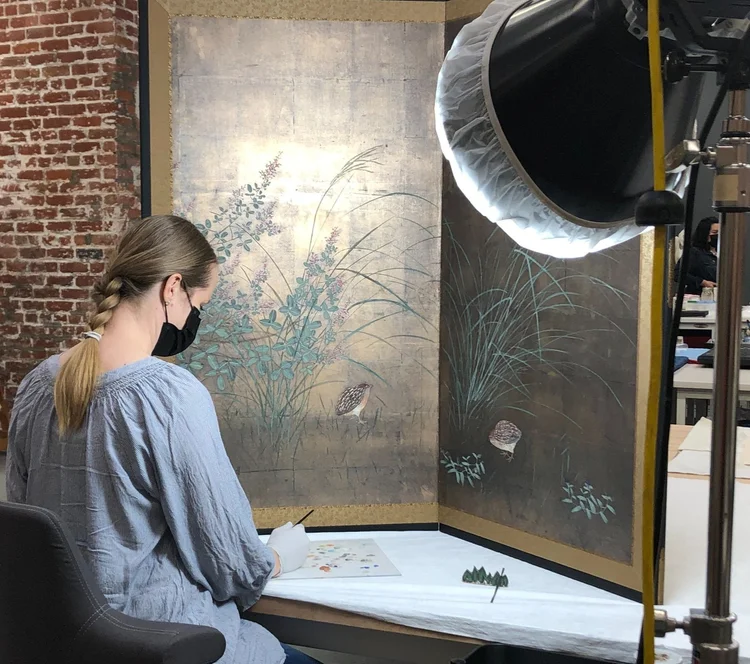
Emilie van der Hoorn, Associate Paper Conservator during treatment.

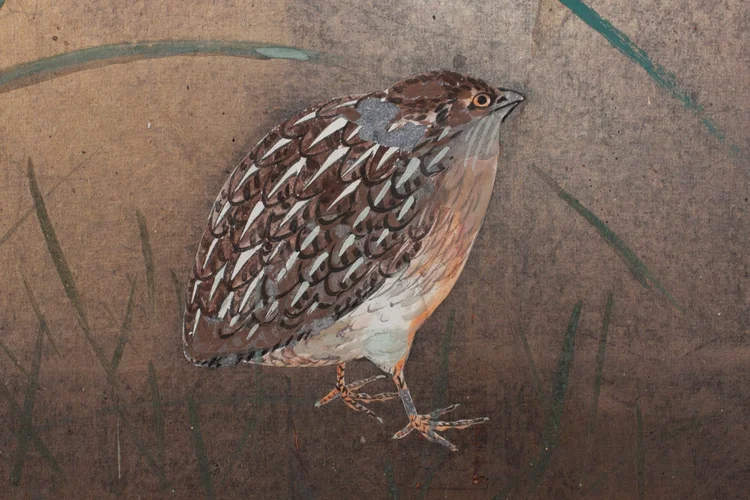
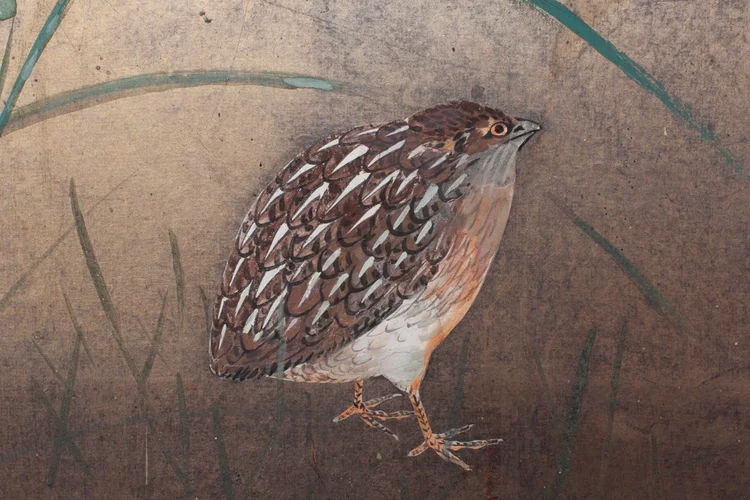
The studio often receives inquiries for damaged Japanese screens. Our Paper Department recently worked on a delicately painted two panel folding screen that depicts two small intricate quails surrounded by grasses and flowers. Each panel is comprised of paint and ink on a gilded surface, with a decorative silk border and lacquered wood frame.

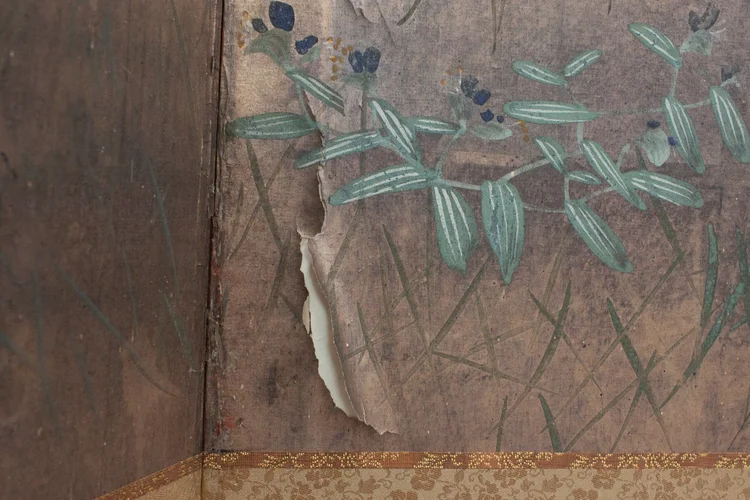
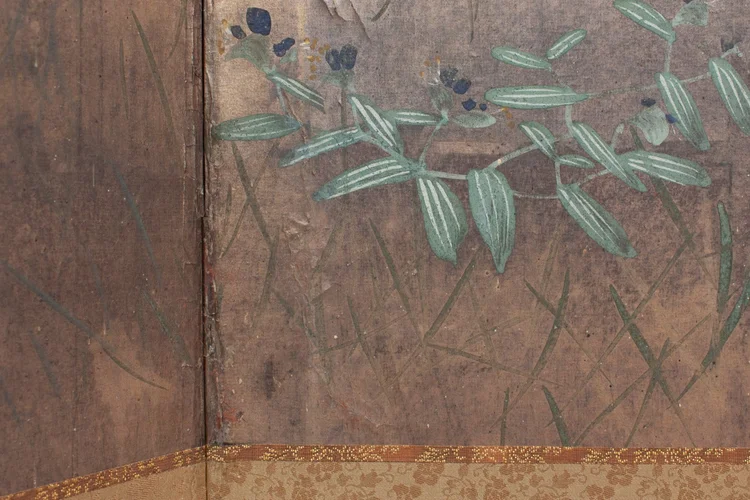
The treatment for the screen included dry cleaning the silk borders and the backside of the panel. The losses in the quail feathers, grasses and botanicals were consolidated and finely inpainted using watercolors. The tear was repaired by inserting a strip of Japanese tissue with wheat starch paste under the delaminating areas and the small losses in the gilding were filled and toned.

If you have a project for our Paper Department please click here to contact us.

(left); Tear before treatment (right); After treatment

(left); Consolidation and inpainting before treatment (right); After treatment


Painting Department: Smoke and Mold Treatment

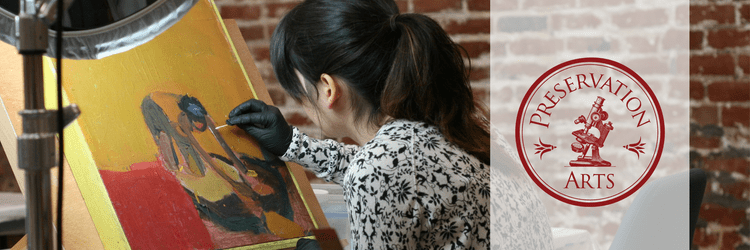
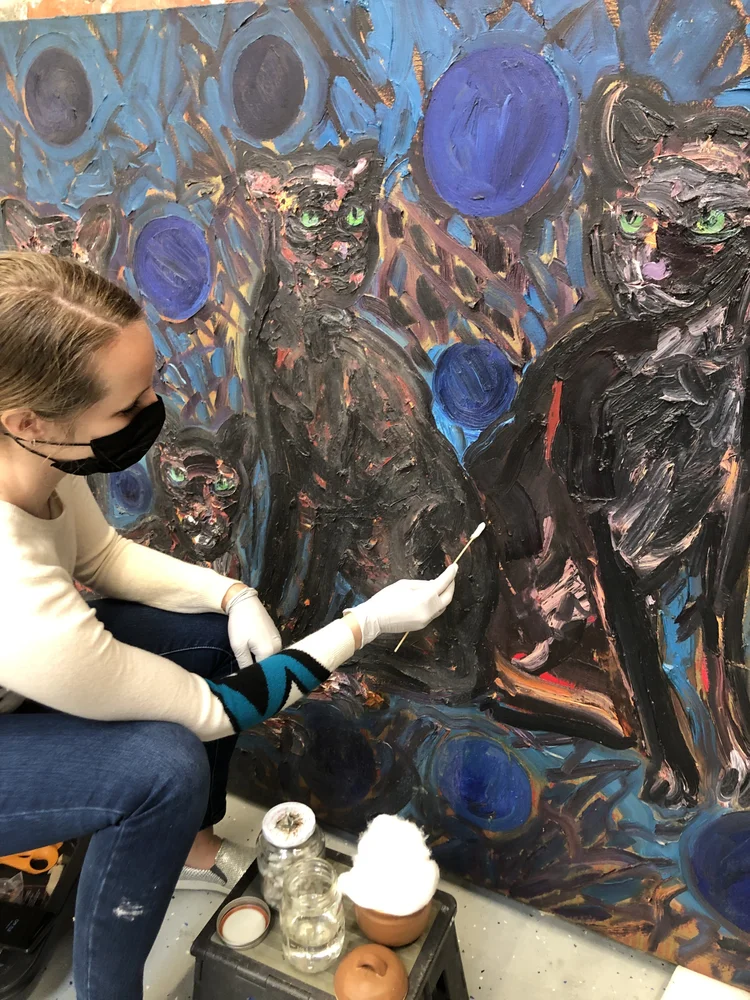
During surface cleaning treatment. Hunt Slonem, Cougars, 2007, oil on canvas

As we emerge from another dry California winter, I’m reminded of the rapidly approaching fire season. This painting by Hunt Slonem, Cougars, 2007, oil on canvas had survived through the 2020 Glass Fire, a wildfire which burned for 23 days in Napa and Sonoma counties. After the wildfire, the painting had been placed aside for over a year until brought into the studio for treatment. The work was painted when the artist was onsite at the client’s winery and reflects the animals found in the landscape of Northern California. Due to the thick impasto, the soot from the fire had settled in a dense layer in all the brushstrokes of the paint film, which attracted moisture leading to mold and mildew that formed on the surface of the painting.

Hunt Slonem is a contemporary painter inspired by nature, travel and his 60 pet birds. Most notable are his series of repetitive bunnies, butterflies and tropical birds. His oil paintings pivot between the fantastic and the natural and are large lavishly colored paintings layered with thick brushstrokes of vivid color that add texture to the overall surface. Born in 1951 in Kittery, Maine, his father’s military career moved the family around as frequently as every two to three years. He received his BA in art at Tulane University in New Orleans, and later attended the Skowhegan School of Painting and Sculpture in Maine alongside Alex Katz and Alice Neel.

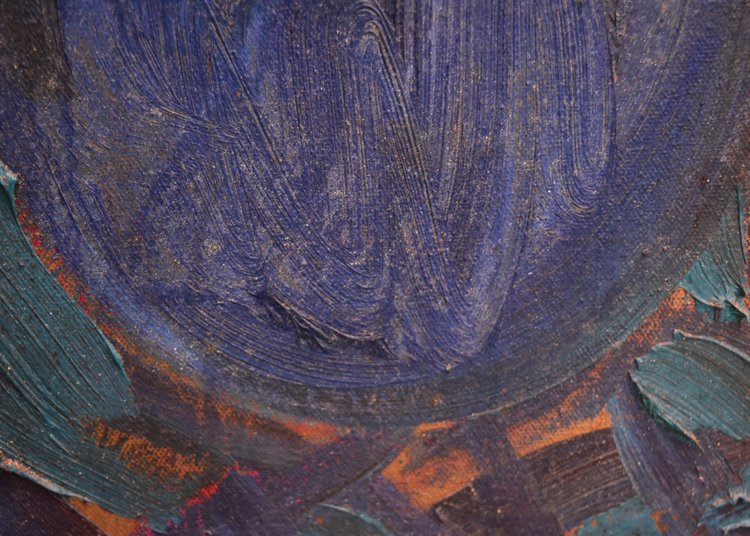
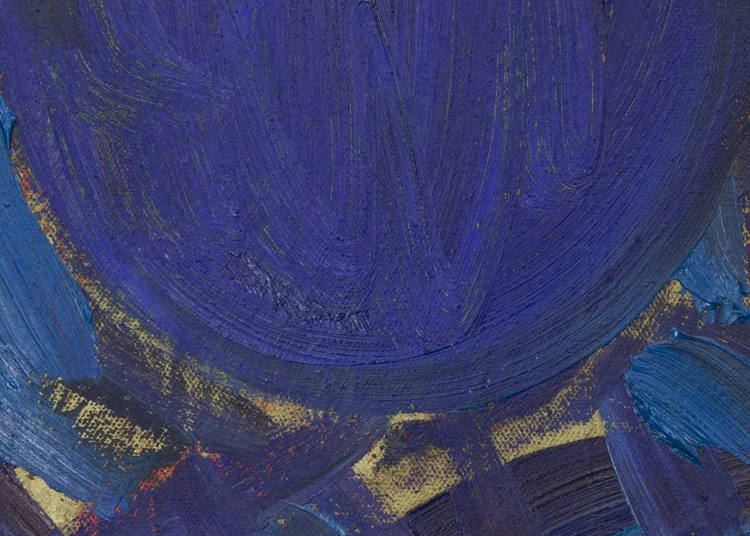
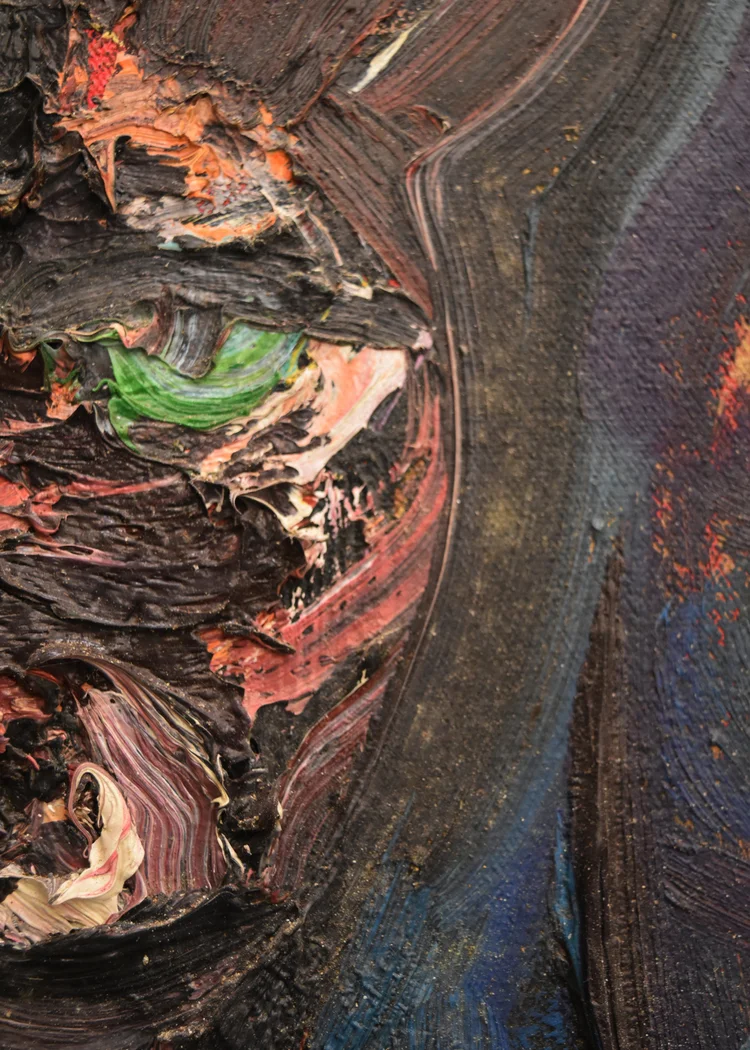
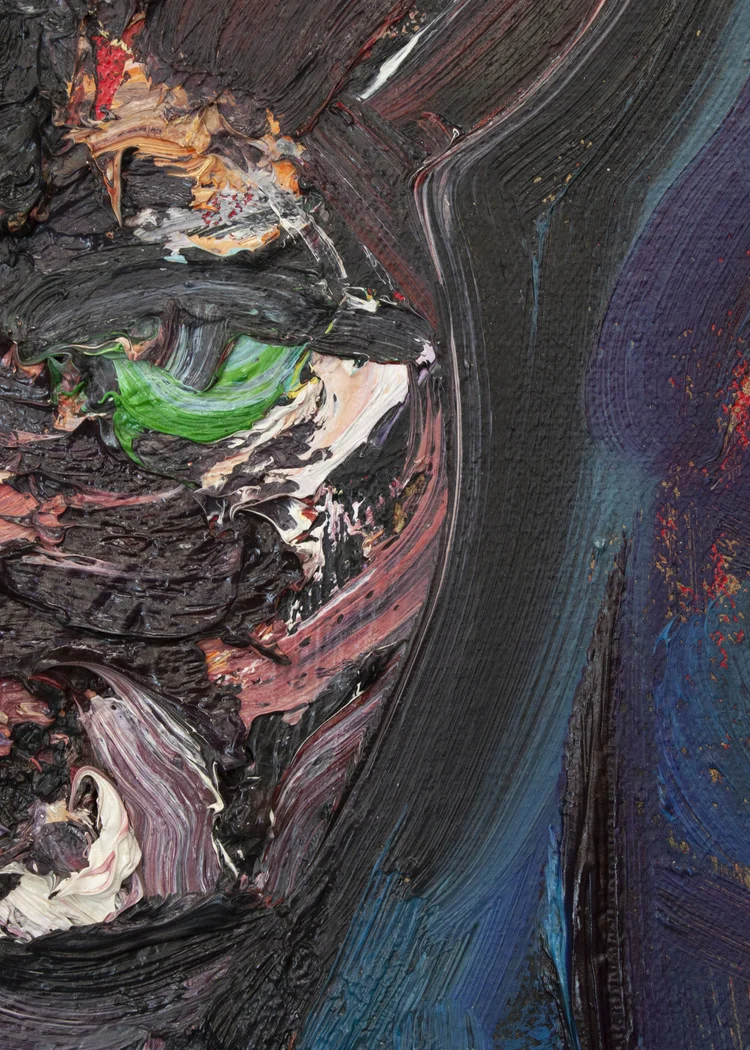
The treatment for the painting included addressing the significant amount of smoke particulates, dust, and mold on the surface. The blue paint areas had heavy mold and had lost saturation and intensity especially concentrated in the dark areas of the cougars. First, the painting was dry surface cleaned followed by further dry surface cleaning using vulcanized rubber sponges. Next, the painting was sprayed with ethanol to eliminate any active mold spores on the canvas. The mold had lessened the intensity of the blue pigment (where the mold growth was heaviest), these areas had shifted from blue to a light green. These areas were retouched to integrate the loss of color into the rest of the painting.

If you have a project for our Painting Department please click here to contact us.

(left); Mold and smoke before treatment (right); After treatment


Object Department: Lacquer Treatment

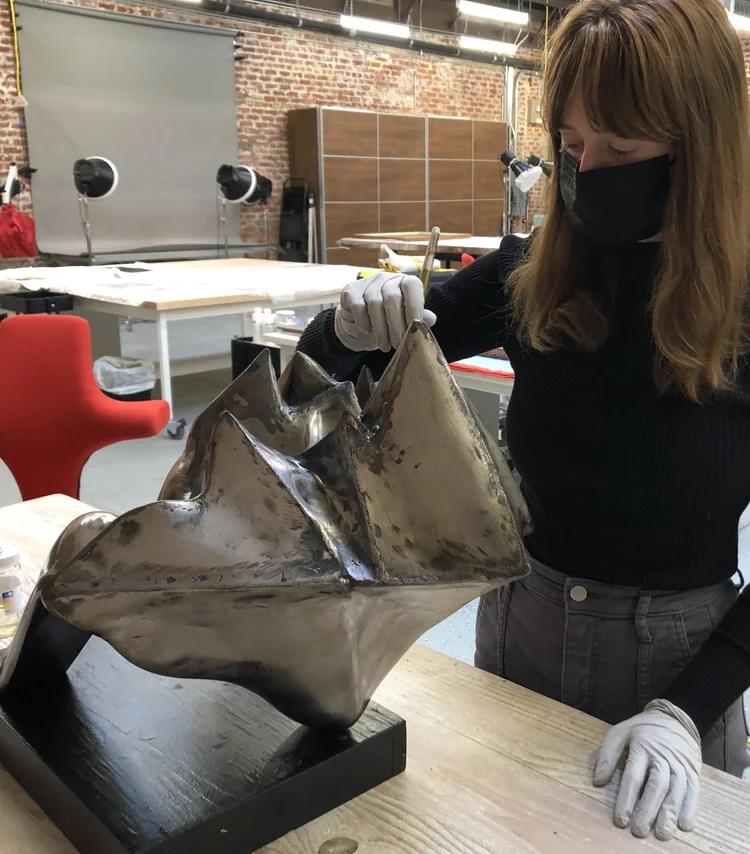
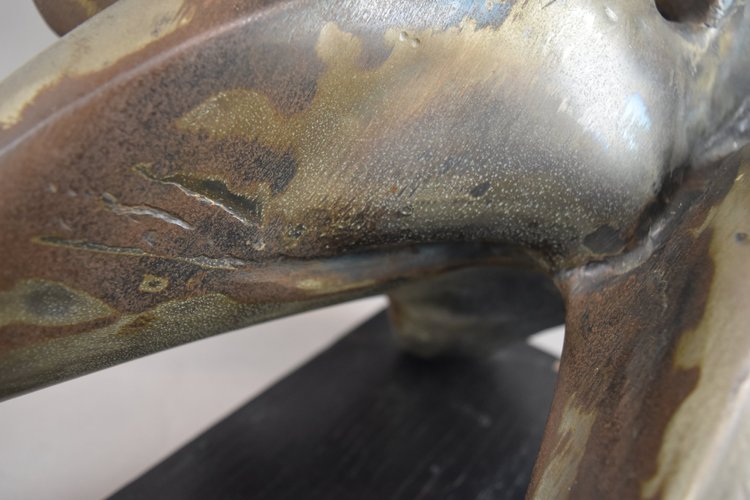
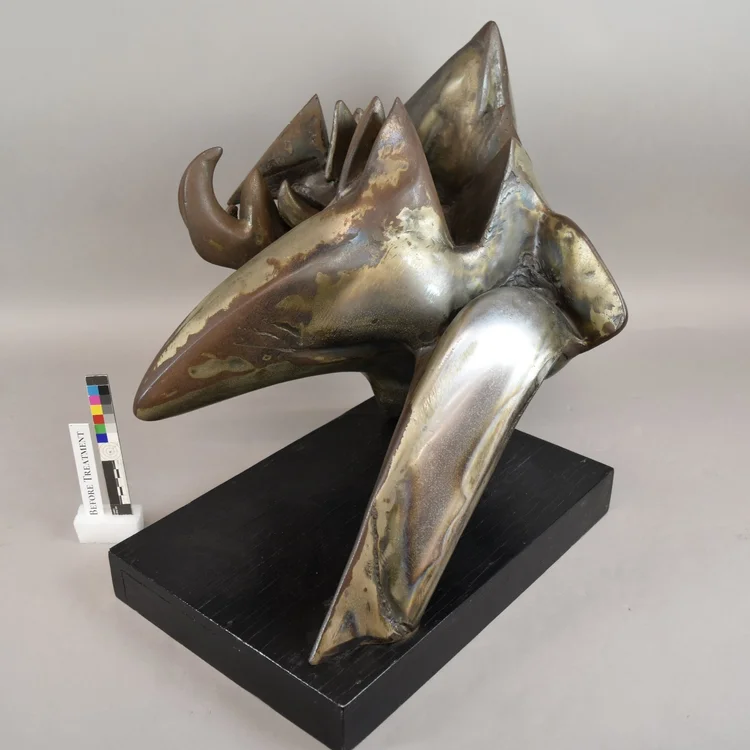
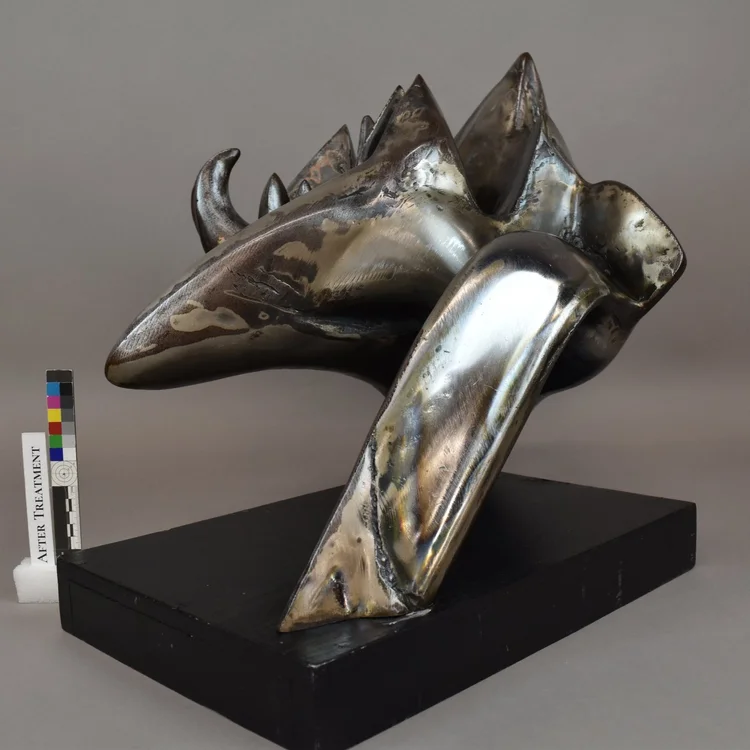
Emily Rezes, Assistant Object Conservator during treatment. Richard Hunt, Natural Form with Mountainous Section, 1967, welded chrome steel

For many years our client’s predominant focus for his collection has been the works by Richard Hunt. His passion for collecting the work is fueled by his interest to learn about the artist’s concepts, materials and life history of the artist. His targeted interest has made him an expert on the artist’s oeuvre and has expanded into a full catalog that is slated to be published. During his time collecting, he has brought several interesting of the artist’s sculptures and works on paper into the studio for treatment. One in particular, Richard Hunt, Natural Form with Mountainous Section, 1967, was created from found materials and welded together.

Richard Hunt was born in 1935, and studied at the Art Institute of Chicago where he experimented with Surrealism and assemblage of found parts procured from junkyards to reuse into organic forms. Hunt works with an array of metals like copper, iron, steel and aluminum which led to him to create a series of "hybrid" figures which references human, animal and plant forms combining organic and industrial subject matters. He is also an expert at the process of printmaking from lithography to cast printed paper. Hunt has continued to experiment throughout his successful career, employing a wide range of sculptural techniques. His work often makes comments on contemporary social and political issues.

The surface of Natural Form with Mountainous Section, 1967 had several condition issues such as a thick discolored yellowed varnish, red iron corrosion at the welds, brown iron corrosion in the grinding marks and minor copper corrosion visible when arriving to the studio. These conditions were present due to the copper intermediary layer under the chrome. The treatment included removal of the discolored varnish layer with acetone. Next, the corrosion was reduced using ethanol and an abrasive pad. Finally, three coats of varnish which included a corrosion inhibitor were applied to the surface with a brush.

If you have a project for our Object Department please click here to contact us.

(left); Before lacquer treatment (right); After treatment


Preservation Arts is the premier center for fine art conservation on the west coast. We specialize in museum quality conservation of paintings, sculpture, objects, works on paper, rare documents, furniture, public art and murals. We have expertise in emergency treatment of damaged art collections and provide collection management, art transportation and storage for your fine art.

 VISIT OUR WEBSITE  
 
Preservation Arts

Preservation Arts, 743 47th Street #102, Oakland, CA, 94609, United States

Powered by Squarespace

Unsubscribe