
Objects Department: Reconstruction of Contemporary Ceramic
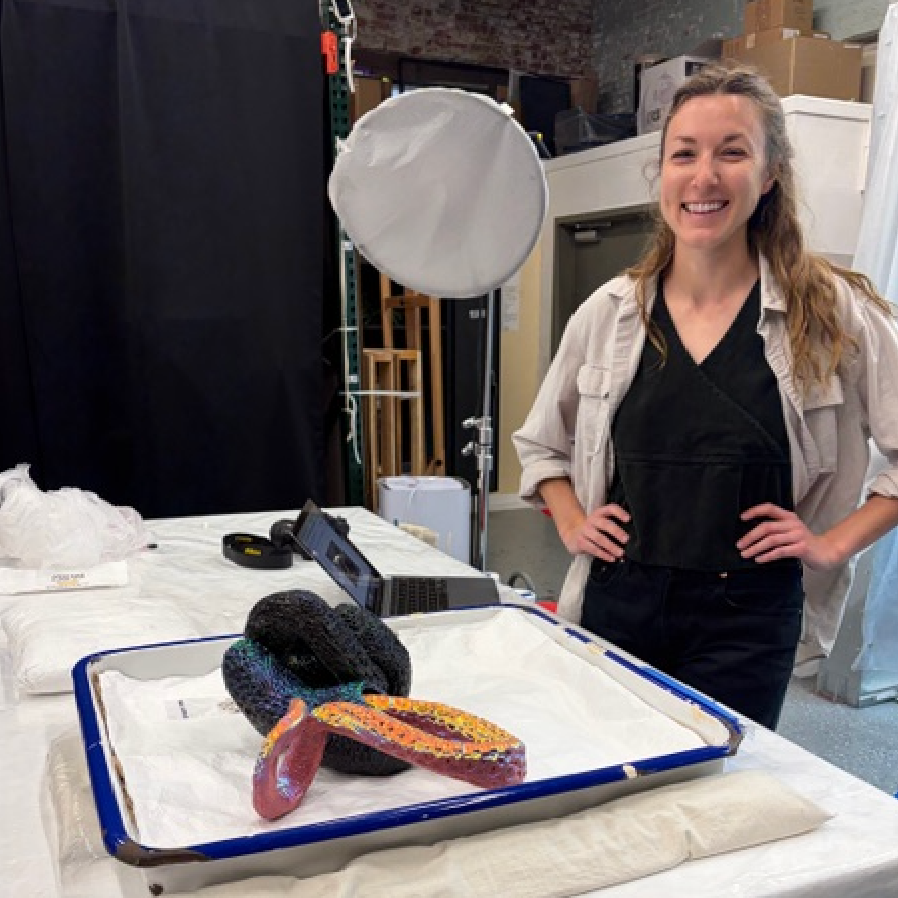
Rachel Reynolds, Assistant Objects Conservator, during treatment
Pae White is known for creating mixed-media installations that explore how the meanings of familiar objects can shift across different contexts. A California based artist, White received her MFA from Art Center College of Design and her BA from Scripps College. Working with a playful sensibility, folding in unexpected imagery into ordinary materials. Her artwork encompasses art, craft and design and her practice is grounded in ongoing experimentation with materials, process and technique. Her installations often incorporate unconventional or ephemeral components, including ceramic, textiles, paper, plastics, and industrial materials, which invite viewers to reconsider the aesthetic of everyday objects. White’s work highlights the evolving relationship between contemporary artistic practice and preservation. The diversity of materials and fabrication methods presents unique challenges for long-term care, requiring close study of material stability, fabrication techniques, and the artist's intent to ensure that these works can be preserved while maintaining the experimental qualities that are central to her practice.
This ceramic sculpture, Francis, Stacy, Seth, Lilith, Jackson, Beatrice, Sanders, Silvia, Rowena, James, 2023, depicts ten serpents coiling on and around a walnut plinth. The serpents are made of glazed ceramic with a metallic sheen, with a process of Physical Vapor Deposition (PVD). In this vacuum-coating process, the ceramic components are placed in a chamber where conditions of extreme heat and pressure vaporize metal, which then condenses onto the surface of the ceramic as a thin decorative film. The various glazes interact differently with the metallic coatings, producing a range of colors and aesthetic effects. The resulting highly iridescent surfaces lend the serpents a sense of movement, as the colors shift with the viewer’s perspective.
The sculpture components were delivered to the studio in severely damaged condition after sustaining significant impact damage. The serpent elements arrived fragmented into more than sixty pieces, ranging from large sections to small fragments, along with numerous minor shards. The extent of the breakage required careful documentation and sorting of fragments prior to stabilization and reassembly.
The conservation treatment focused on stabilizing the ceramic components and visually integrating the break lines while preserving the complex metallic surfaces. Each fragment was first dry cleaned, and the break edges were carefully consolidated to prepare them for reassembly. The fragments were then dry fitted to confirm alignment before being adhered, allowing the serpents’ original forms to be accurately reconstructed. Smaller fragments were subsequently stabilized and reintegrated. Areas of loss along the break lines were filled and shaped to match the surrounding ceramic surfaces. These fills were then inpainted with reversible conservation pigments to visually integrate the repairs. Particular care was taken throughout the treatment to protect the iridescent PVD-coated surfaces, as these thin metallic films are highly sensitive to solvents and abrasion. Once structural stabilization was achieved, the reconstructed serpents were safely reinstalled on the walnut plinth.
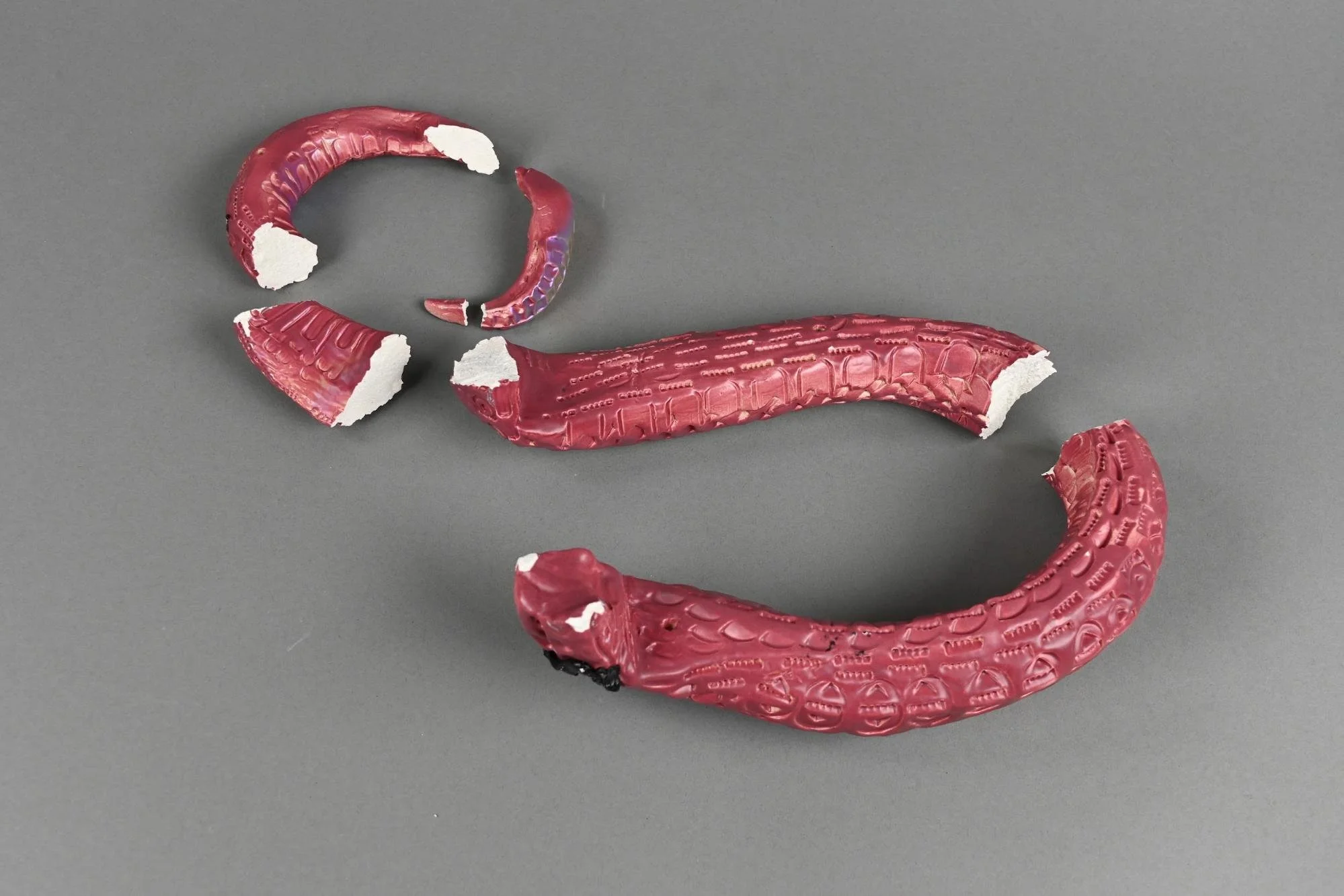
Bottom of Pink Serpent, Before (Left) and After (Right) Treatment
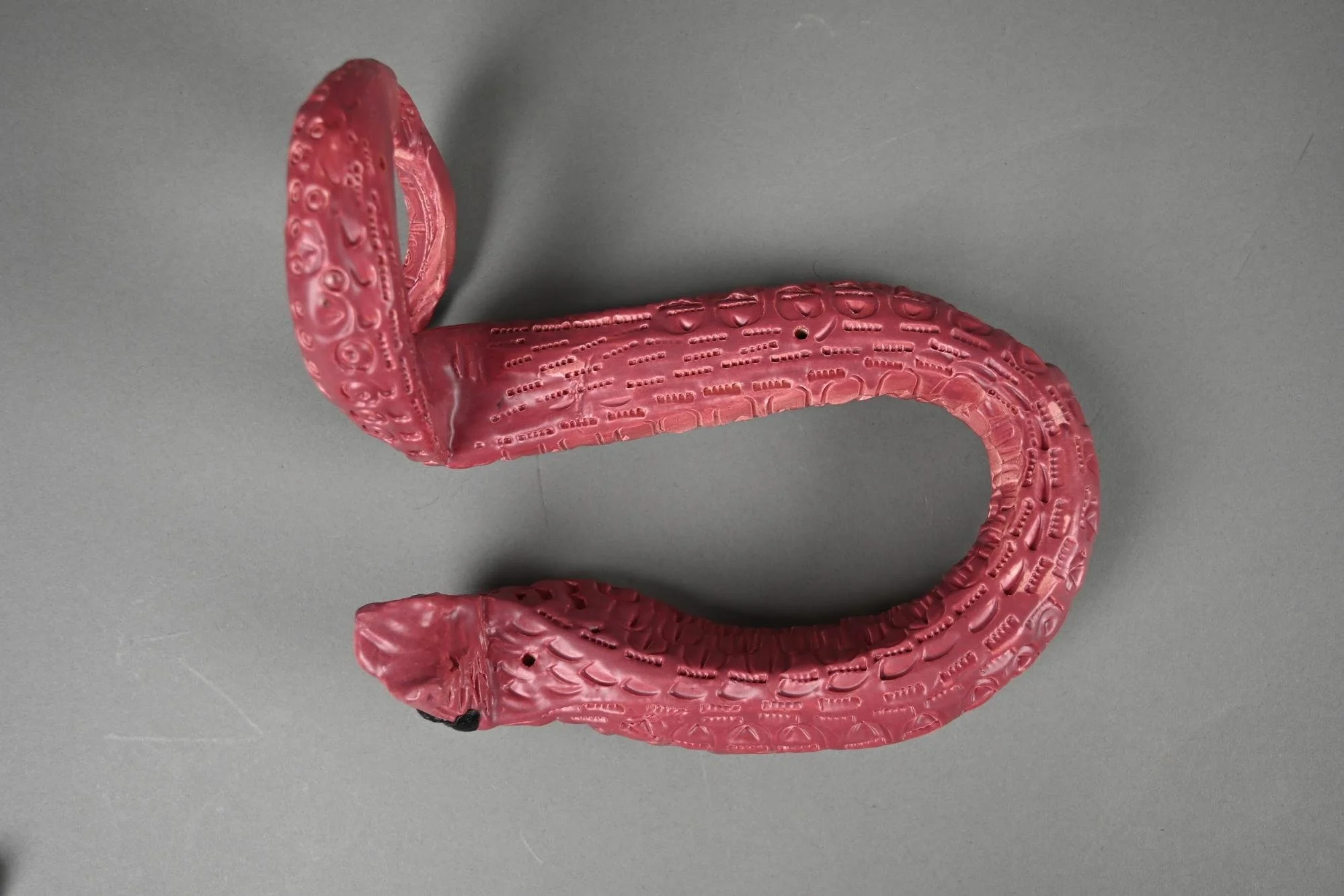
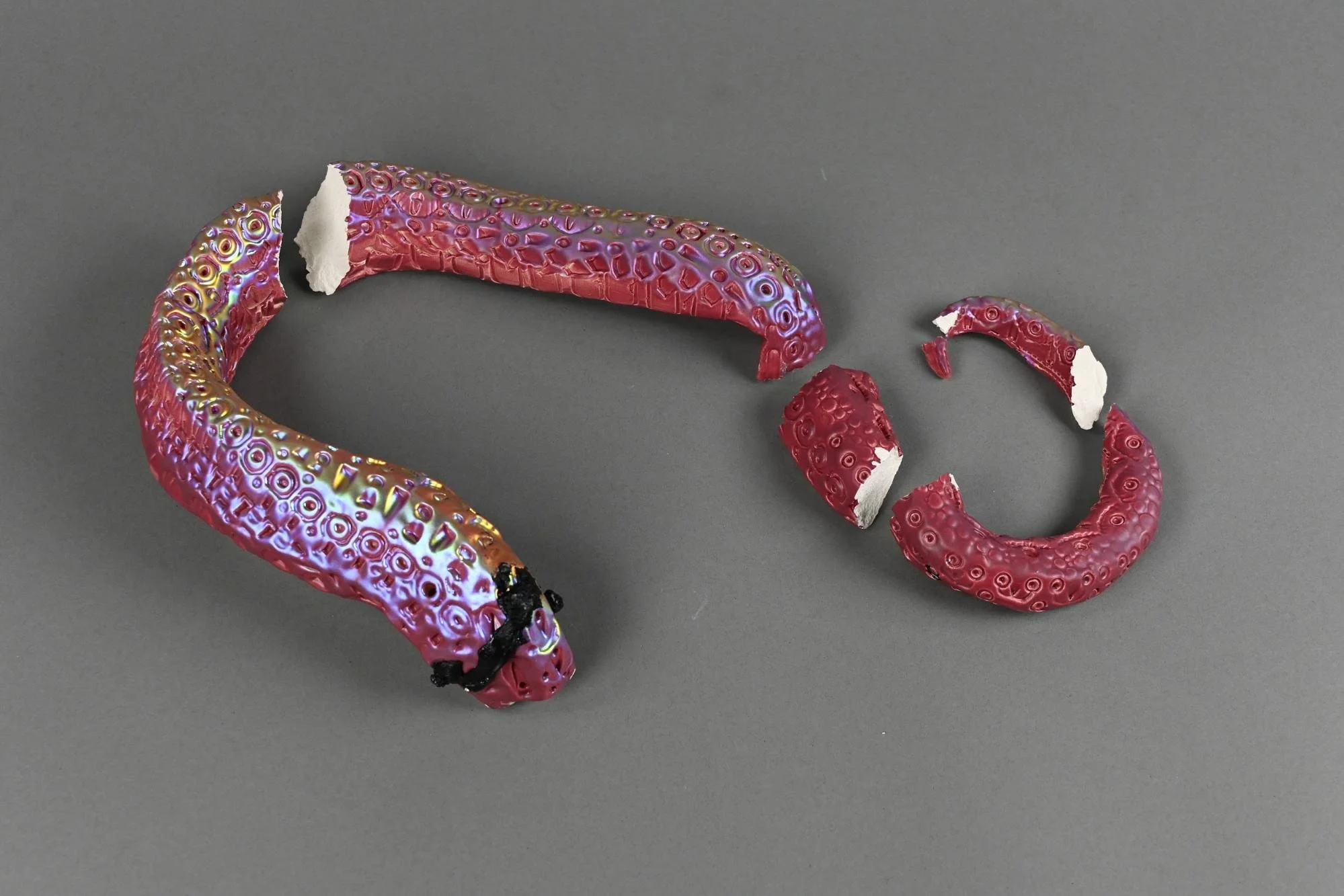
Top of Pink Serpent, Before (Left) and After (Right) Treatment
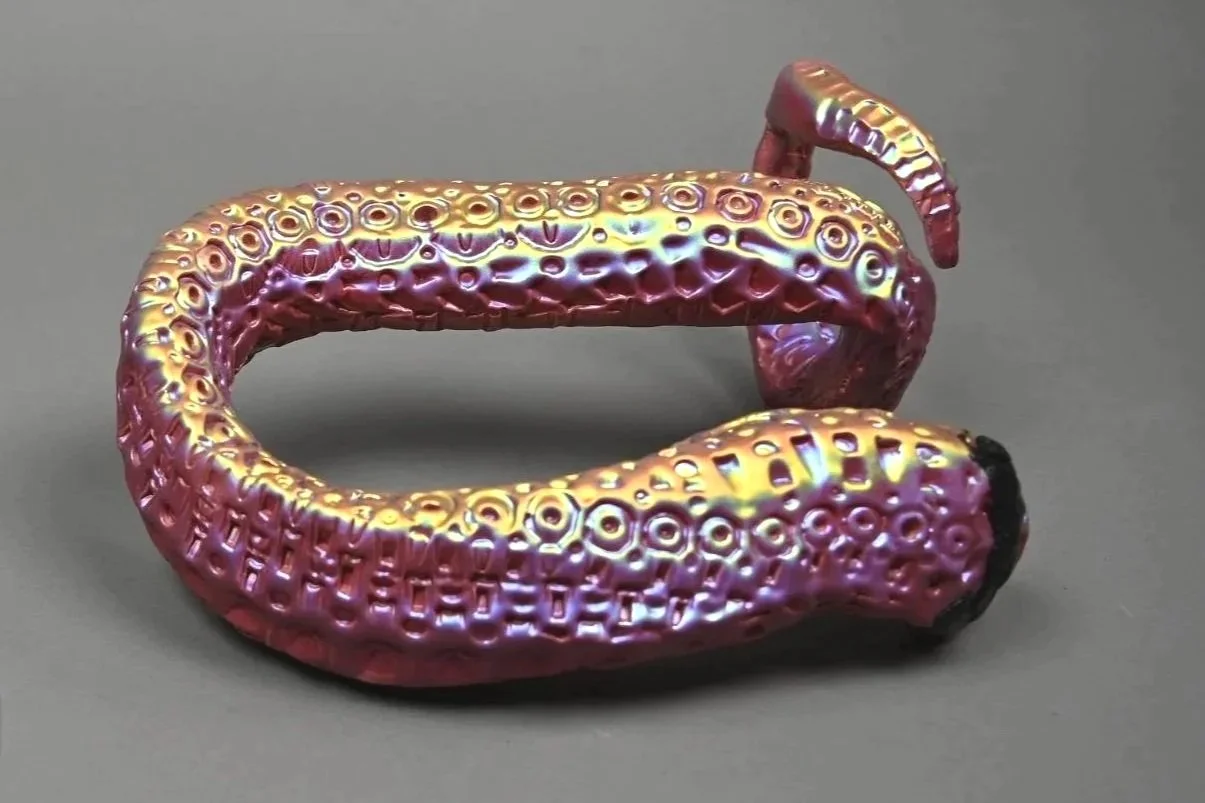
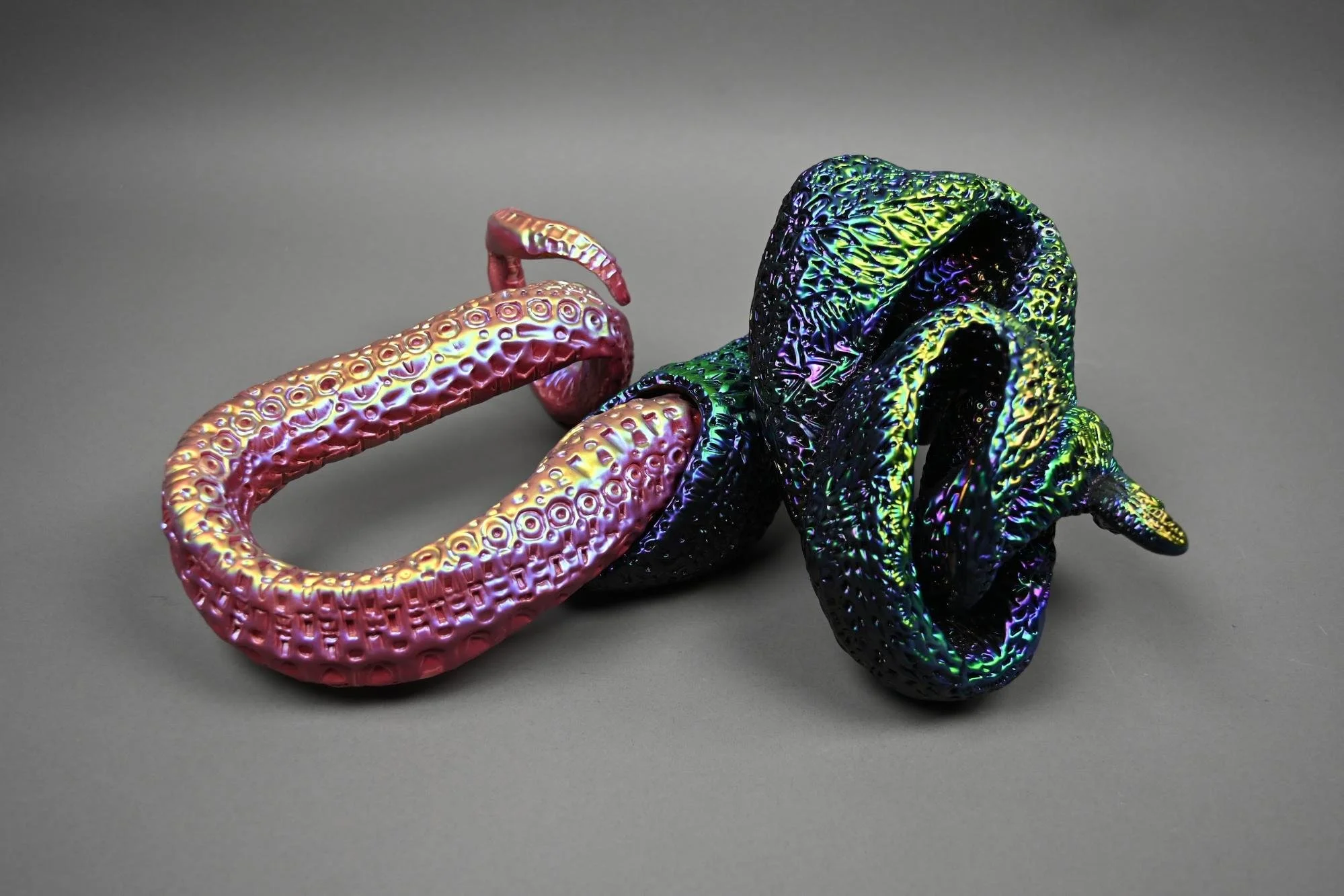
Impacted Components, After Treatment
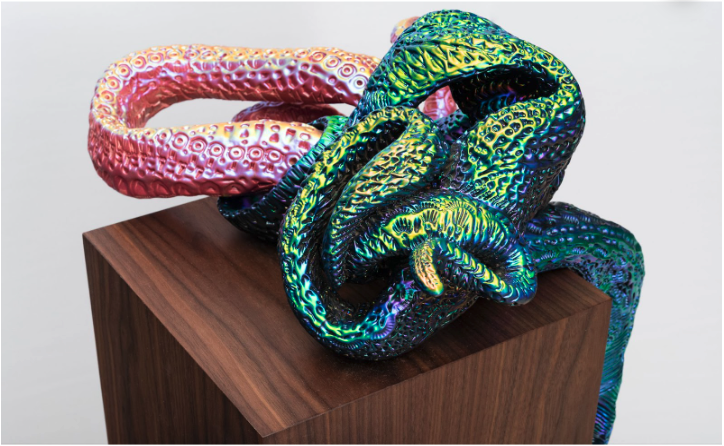
Sculpture Installation, View 1
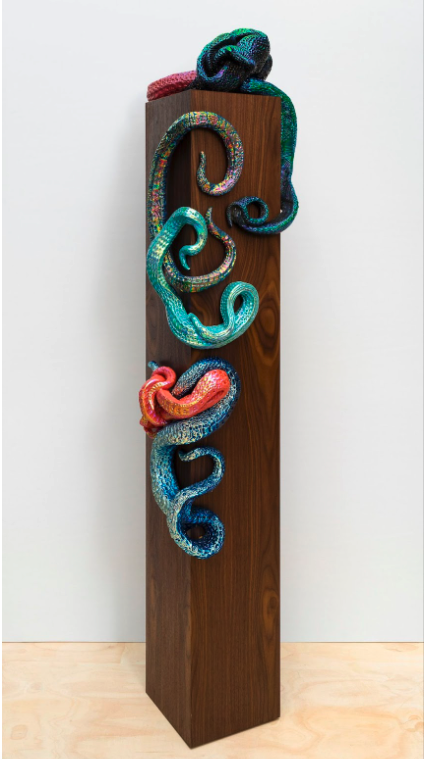
Sculpture Installation, View 2