
Outdoor Sculpture Department: Stabilization of Weathering Steel Sculpture
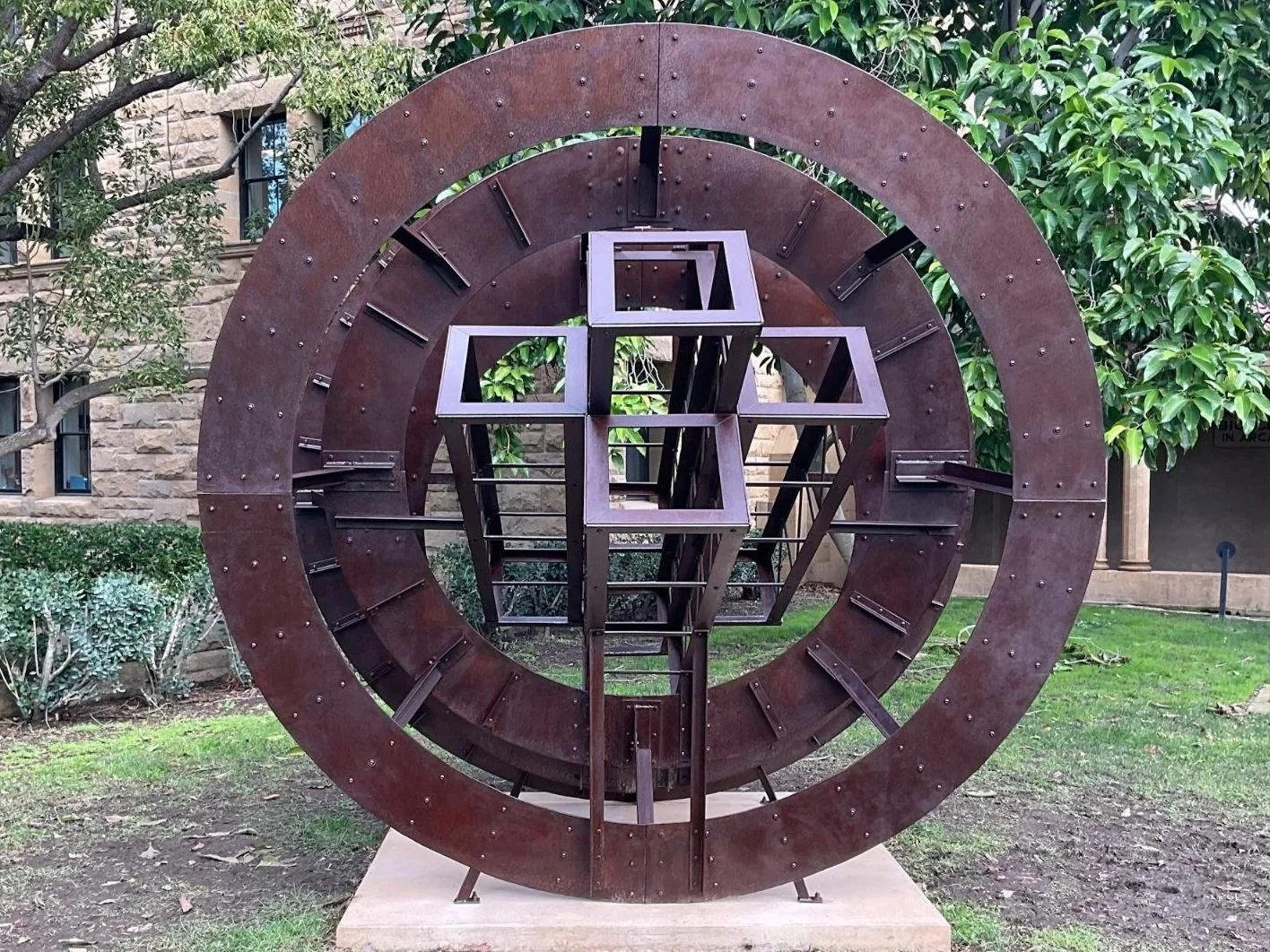
Linda Fleming, Space Lace, 1997, weathered steel at Stanford University
The Stanford University campus is home to an extensive outdoor sculpture collection consisting of over 85 works that visitors can encounter through its grounds. Artists represented include Andy Goldsworthy, whose monumental installation Stone River winds through the landscape, as well as sculptures by Charles Ginnever and Auguste Rodin. In the collection is Linda Fleming’s Space Lace, 1997, which is currently displayed outside of Encina Commons at Stanford University.
Space Lace brings together the physical realities of the material world with a more expansive, imagined universe shaped by the artist’s vision. In her work, Fleming explores the coexistence of the mundane and the cosmological—spaces where multiple realities intersect and where past and present remain intertwined. Fleming, a native of Pennsylvania, continues to maintain an active studio practice and serves as Professor of Fine Arts and Chair of the Sculpture Department at California College of the Arts.
The sculpture is constructed of weathering steel (often used interchangeably with Corten Steel), a material first used by sculptors in the 1960s and 1970s in the United States. Whereas in most common carbon steels, the oxide develops to the point that total decay may occur, as signaled by the powdering of red rust, weathering steels develop dense oxide films that slow the rate of corrosion and are protective.
First treated in October 2023, the sculpture now receives regular maintenance by our outdoor sculpture conservation team. Routine monitoring and care are strongly recommended for works installed in public environments or on permanent outdoor display in order to mitigate environmental deterioration and support long-term preservation. As part of the initial treatment planning, the artist was consulted in 2023 regarding fabrication methods, materials, coatings, and the intended surface appearance of the sculpture.
Since 2023, a number of condition issues have been addressed and the sculpture’s appearance is closer to the artist’s original vision. Structurally, the sculpture was found to be unstable. The original concrete pads were sinking unevenly into the surrounding lawn, causing the sculpture to twist. This movement had resulted in tension across the artwork with sheared bolt heads, bolt loss, and raised elements at several mounting points. Due to the resulting structural instability, it was recommended that the two existing concrete pads be replaced with a single continuous pad to properly level the sculpture and prevent further twisting or potential tipping. The replacement concrete pad was installed by the Cantor Arts Center in late 2025, providing a stable and properly aligned foundation for the sculpture and supporting its long-term preservation within the campus landscape.
Once the structure was stabilized, other conditions could be addressed such as a detached element, replacing and pre-rusting missing bolts, overall surface cleaning to reduce dirt, mineral deposits and biogrowth, as well as applying saturating oil based coatings that were requested by the artist to give a deep saturated appearance.
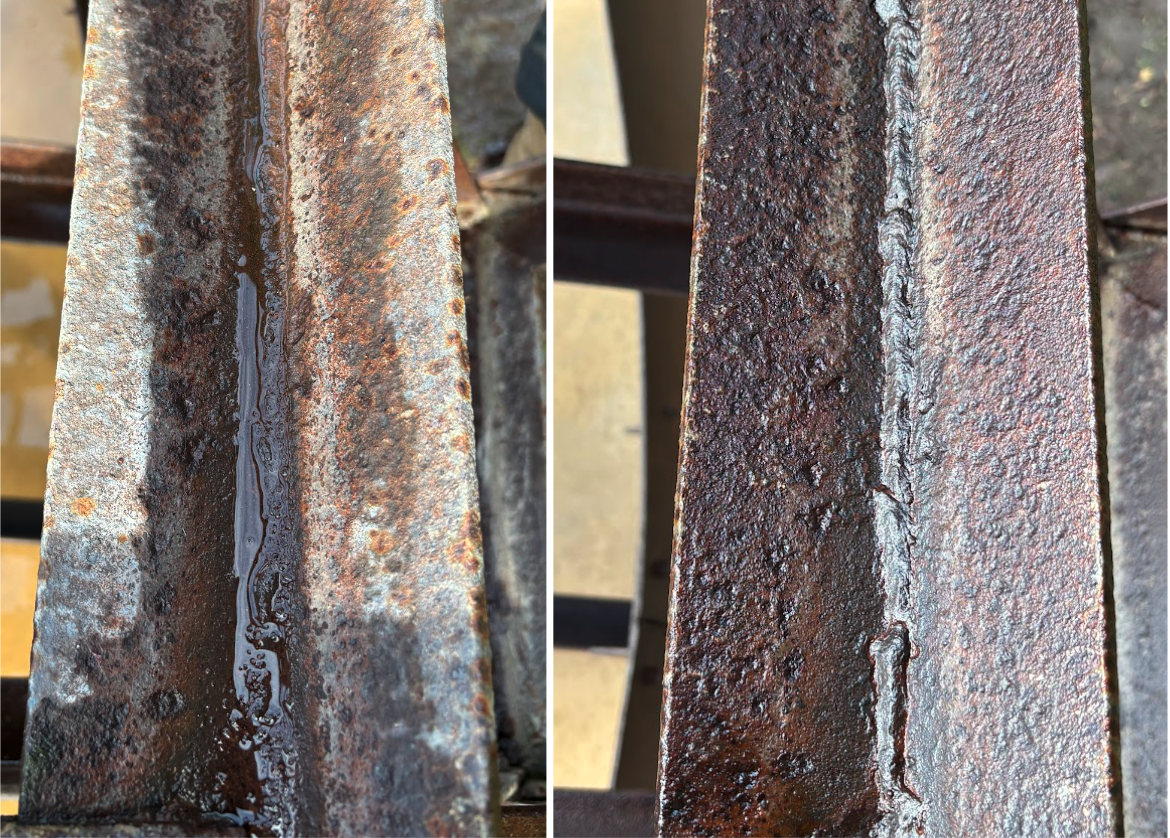
Detail of Mineral Deposits on Girder on East Side, Before (Left) and After (Right) Treatment
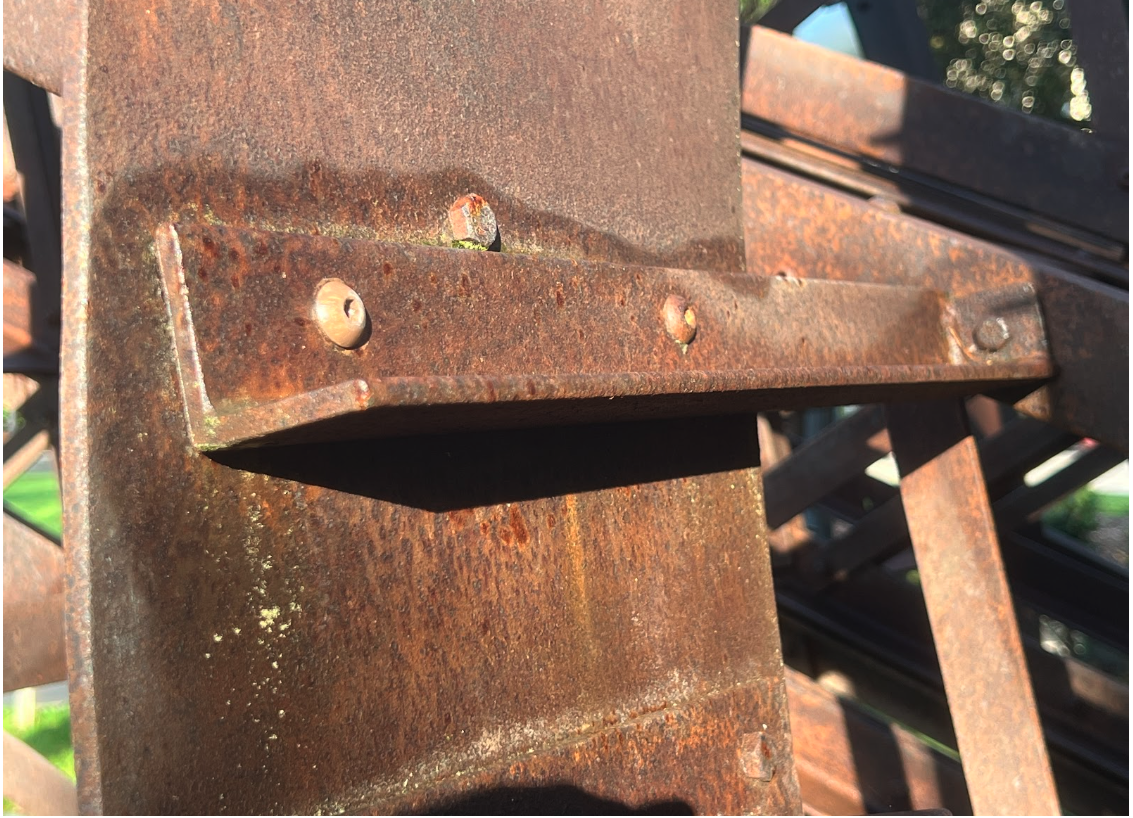
Detail of Biogrowth on Bracket on East Face of Ring 2, Before Treatment
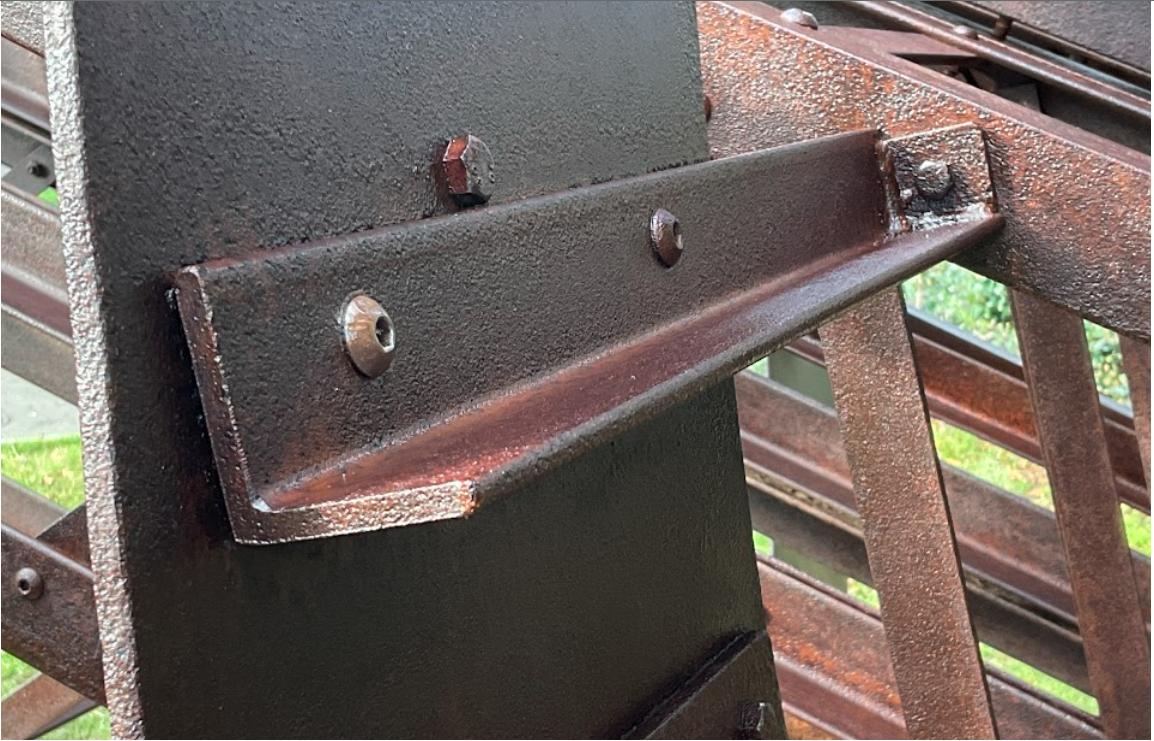
Detail of Bracket on East Face of Ring 2, After Treatment
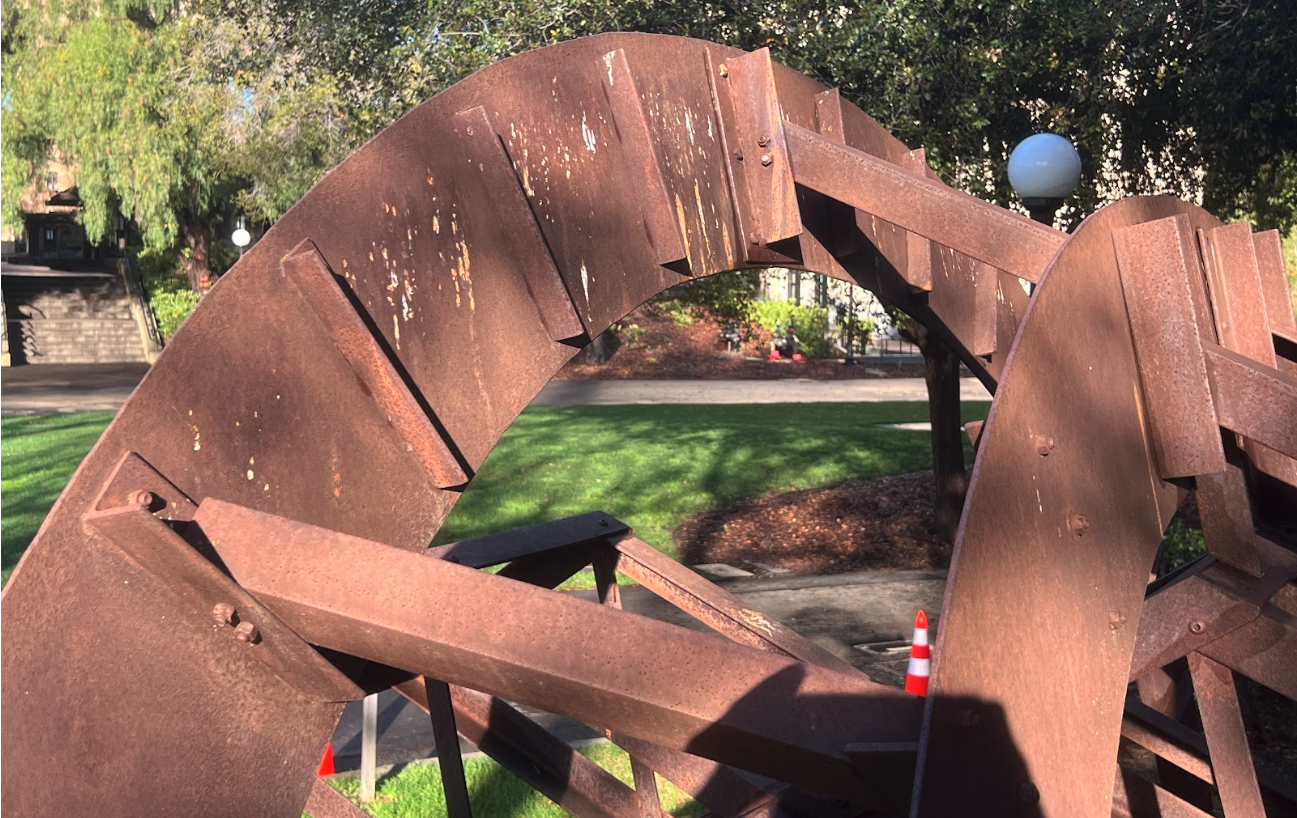
Detail of Bird Droppings on East Surface of Ring 1, Before Treatment
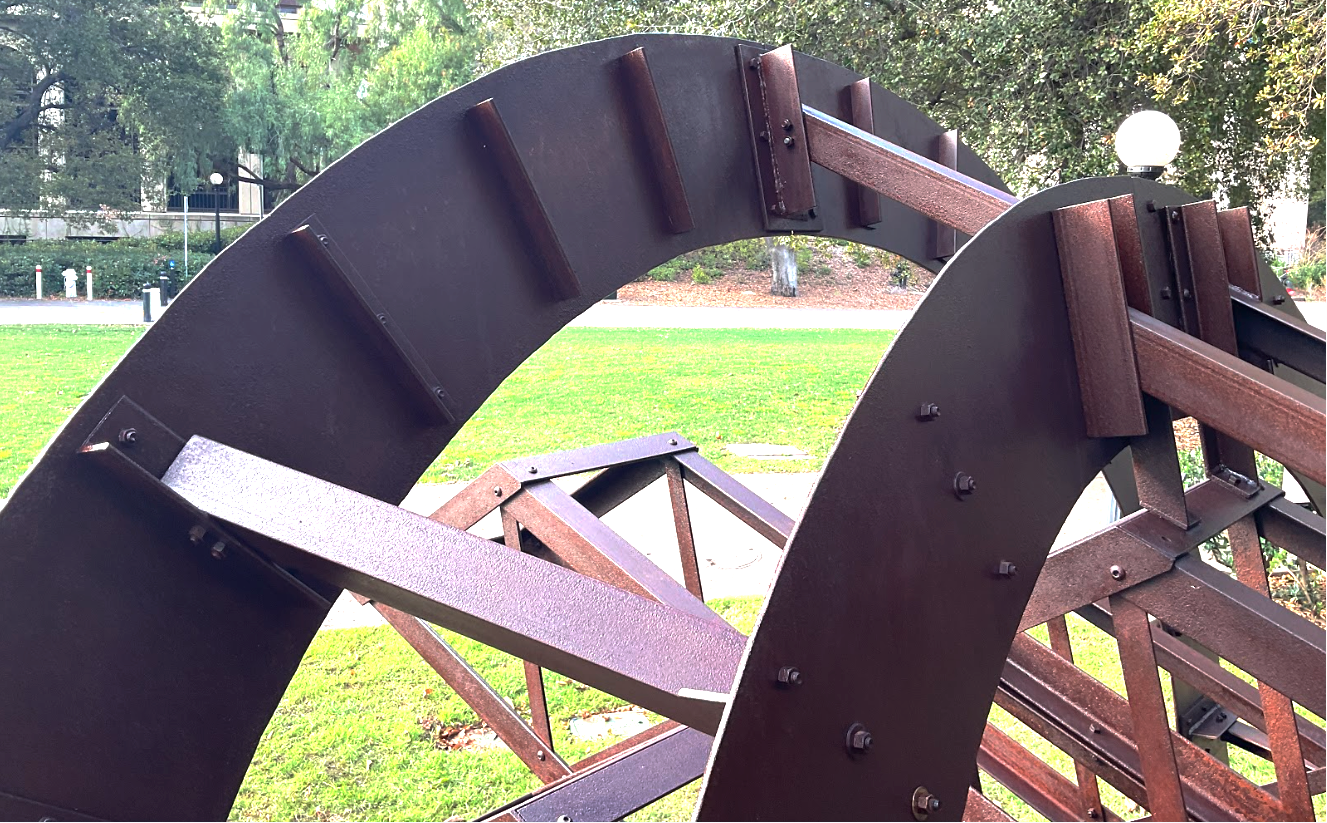
Detail of East Surface of Ring 1, After Treatment
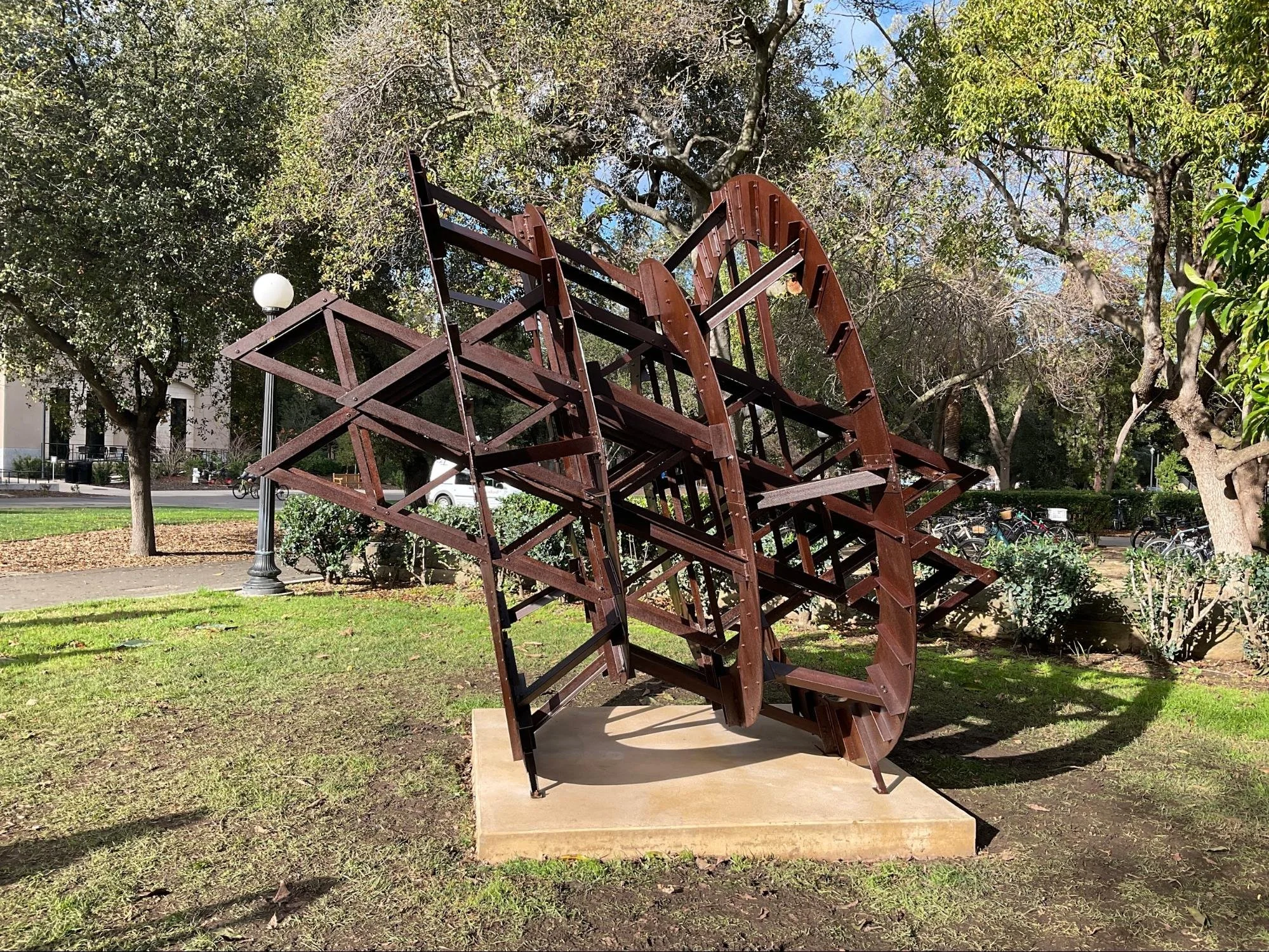
Proper Right Side After Treatment
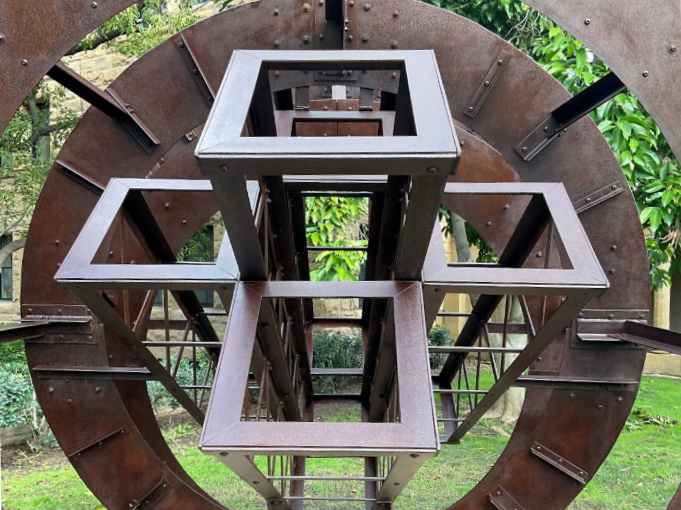
Detail of Front- After Treatment