
Works on Paper Department: Backing Removal of Masonic Tracing Board
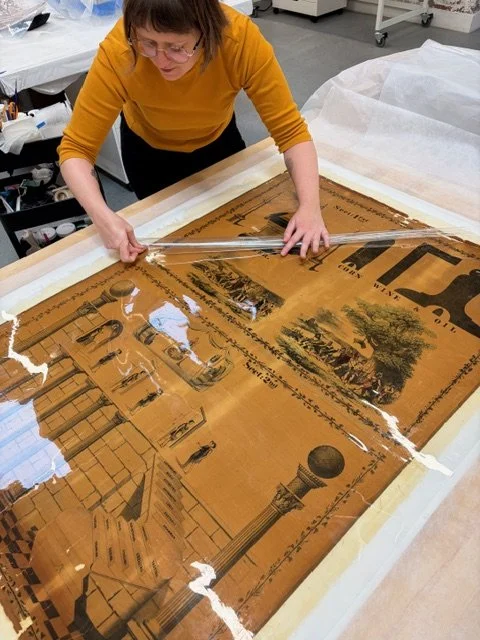
Bethany Procopio, Paper Conservator during treatment
Created in 1868 by Freemason and Order of the Eastern Star member John Sherer and printed by The Pettibone Bros. Manufacturing Company of Cincinnati, these three Masonic tracing boards are hand-colored lithographs mounted on textile and suspended from black-painted wooden rods. Used in lodge instruction, tracing boards functioned as visual teaching tools, guiding initiates through the symbolic language of Ancient Craft Masonry. Stamps on the verso of each textile lining identify their San Francisco supplier, Daniel Norcross & Co., which operated from the Masonic Temple at 6 Post Street until the building was destroyed in the 1906 earthquake and fire.
The tracing boards were delivered to the studio by the Valley Masonic Building Association in extremely fragile condition. The paper substrates had fractured extensively, including a significant lateral break across the center of each board where two sheets had originally been joined. The textile backings were torn and stained, iron nails had corroded, and the boards exhibited widespread planar distortions. A discolored varnish layer further obscured the imagery and diminished the legibility of the printed designs.
Treatment focused on stabilizing the fragile paper supports while retaining the historical materials. The surfaces were first dry cleaned to remove accumulated dirt and debris, followed by controlled chamber humidification to gently relax the distortions in the paper. The deteriorated textile linings were then carefully removed. Each tracing board was subsequently relined using Japanese tissue and wheat starch paste to provide stable structural support. Displaced and detached fragments, including a handwritten inscription, were individually stabilized and reintegrated prior to relining. Original hardware was cleaned, treated to mitigate corrosion, and reattached. Through this treatment, the tracing boards have been structurally stabilized and their imagery made fully legible. This conservation work ensures the long term preservation of the boards, allowing these teaching objects to remain important visual links to the traditions, symbolism, and history of Freemasonry.
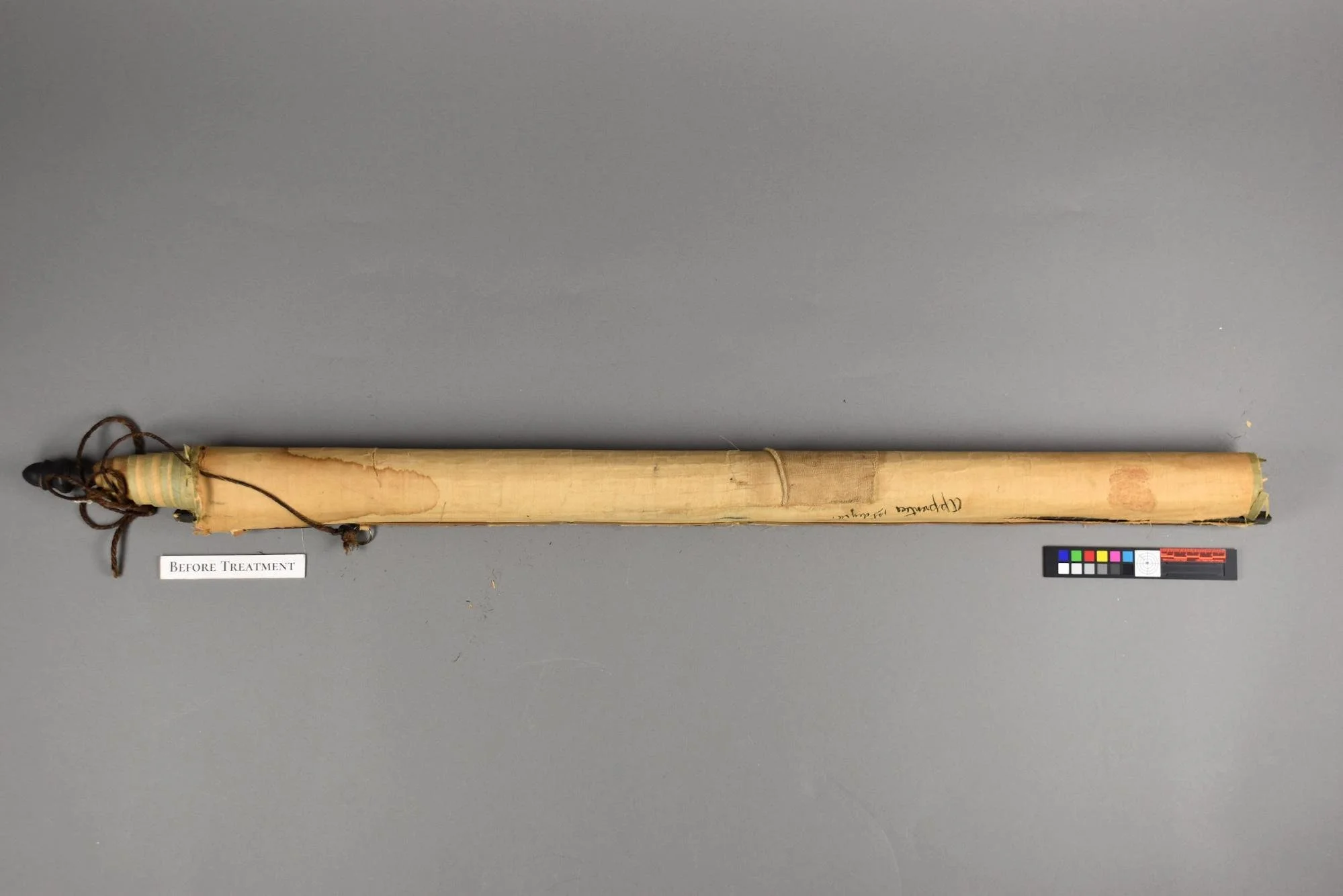
Tracing Board 1, Before Treatment, Rolled
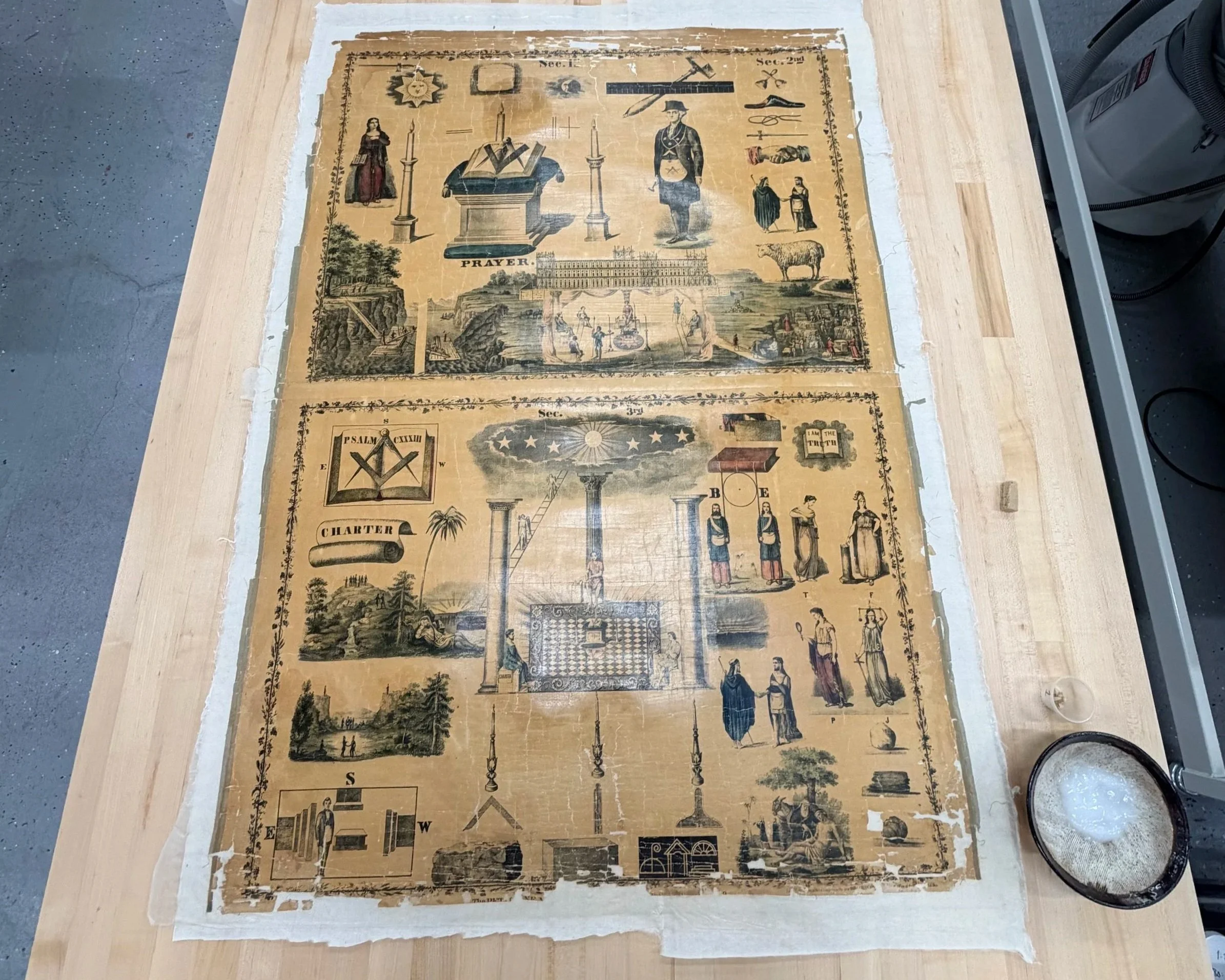
Tracing Board 1, During Lining Treatment
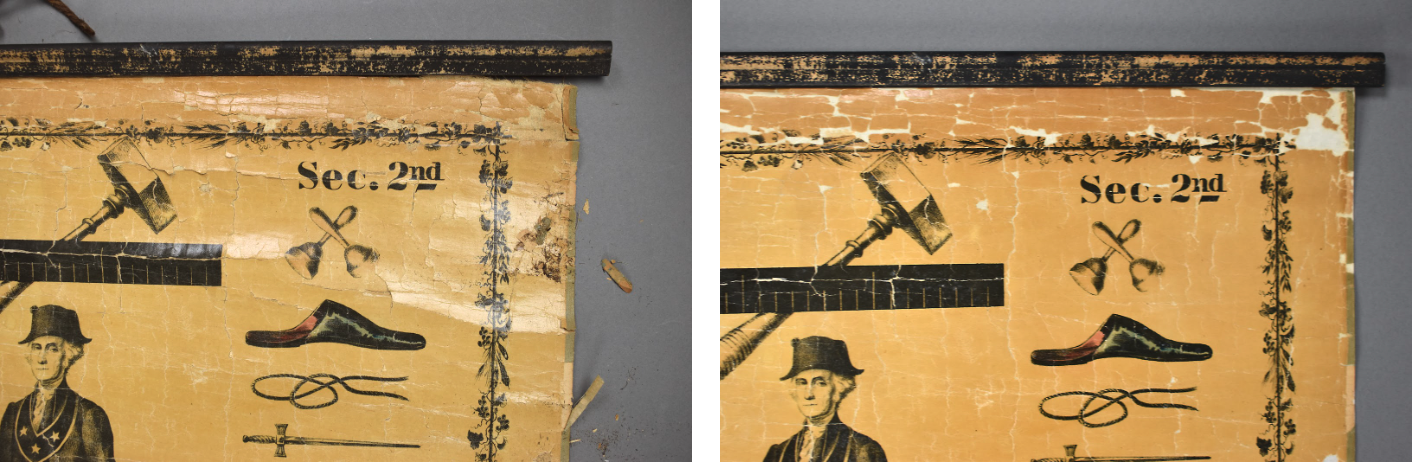
Tracing Board 1, Before (Left) and After Treatment
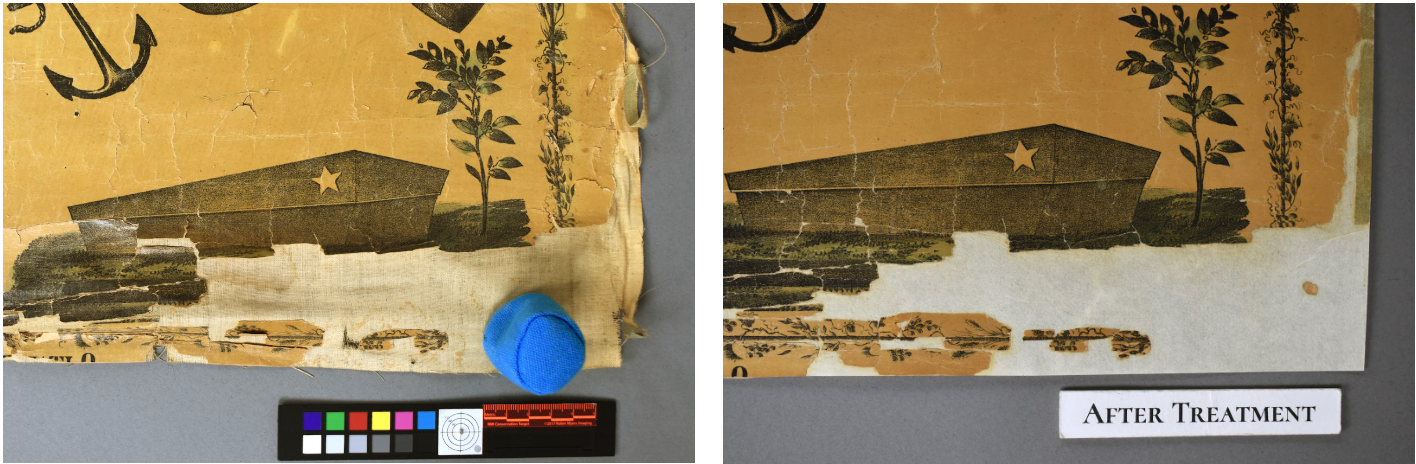
Tracing Board 2, Before (Left) and After Treatment
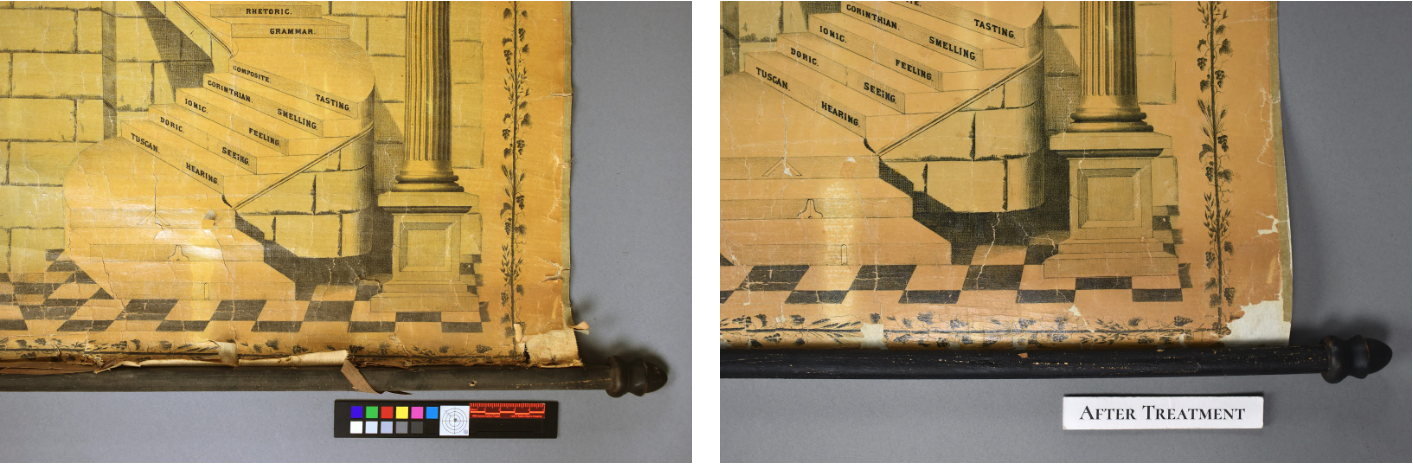
Tracing Board 3, Before (Left) and After Treatment
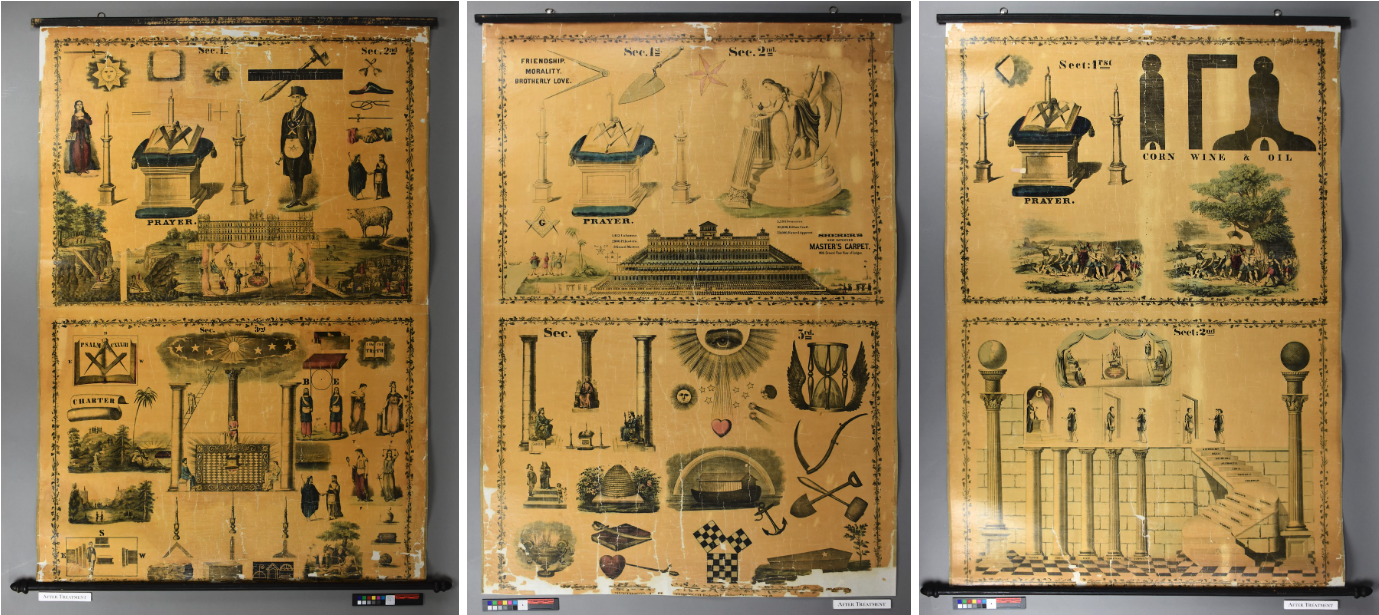
All three tracing boards following treatment